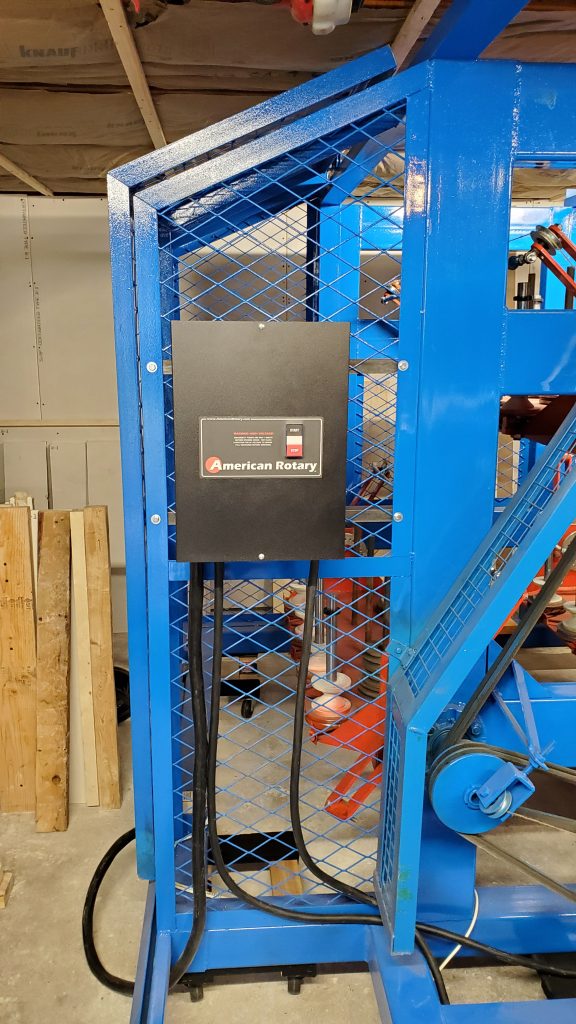
So I’ve been getting the machine ready to make rope. The electrical connections required are made a lot more complicated because the workshop doesn’t have 3 phase power. The phase converter takes up space which is limited in the workshop. So I decided to mount the converter motor and control panel on the machine. This allows the machine move without having to redo a bunch of wiring. The control panel it only about 30 pounds and easily mounted to the side of the machine.
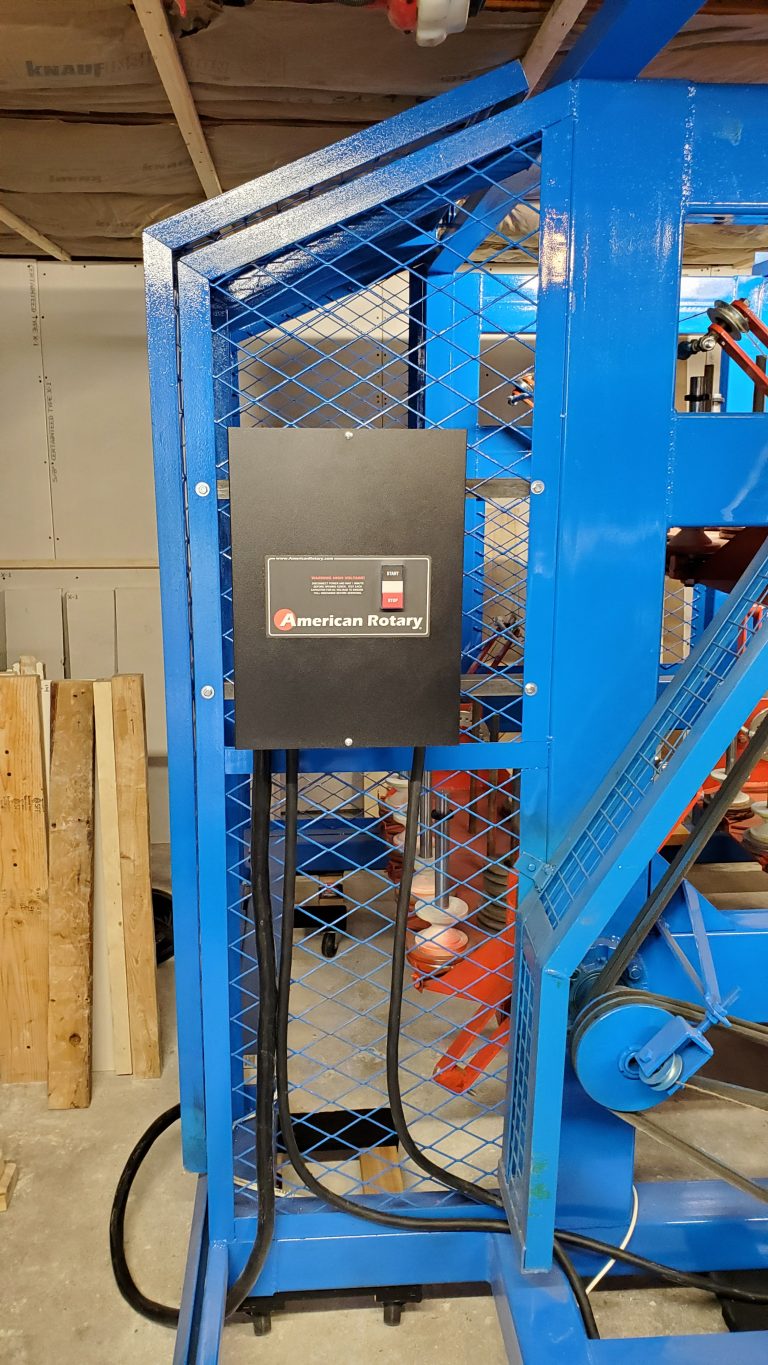
Wired phase converter control panel with cover on and power cords running to the generator, idler motor position, and rope machine power input.
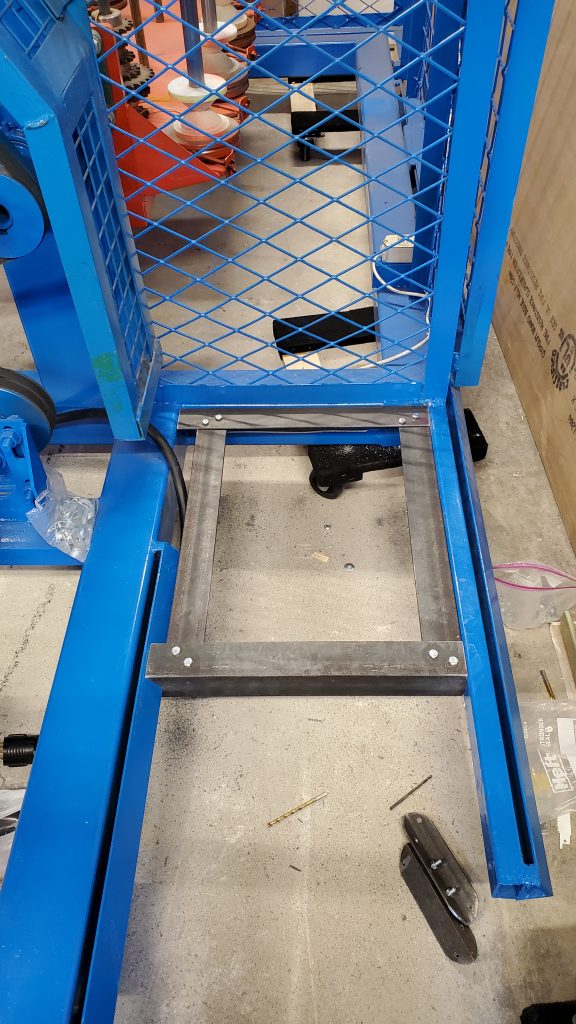
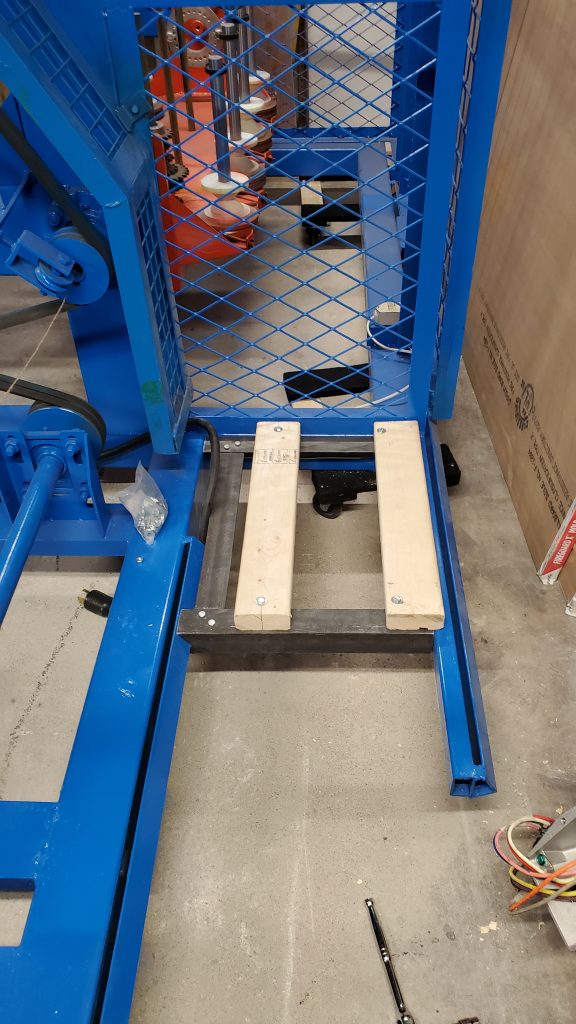
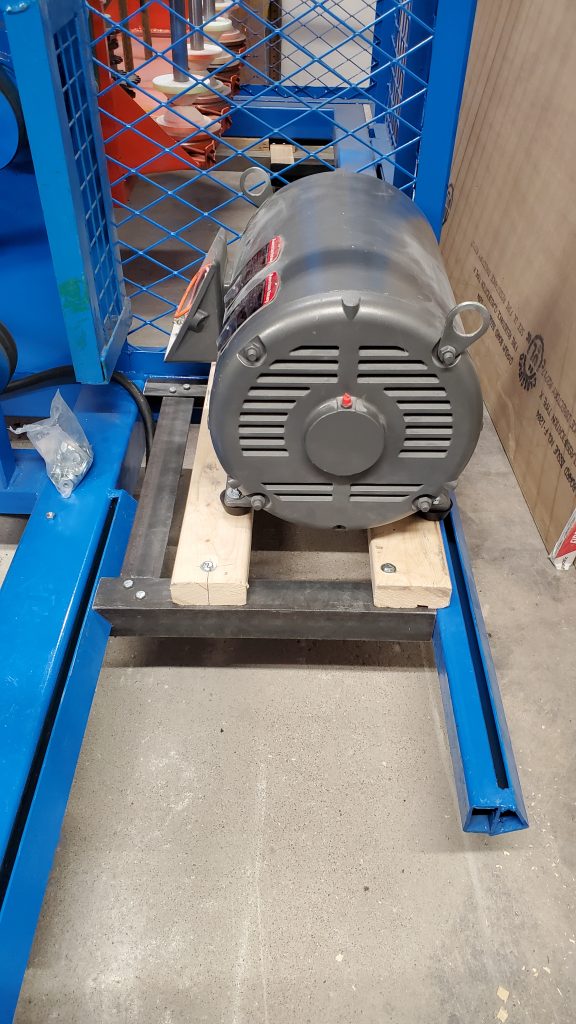
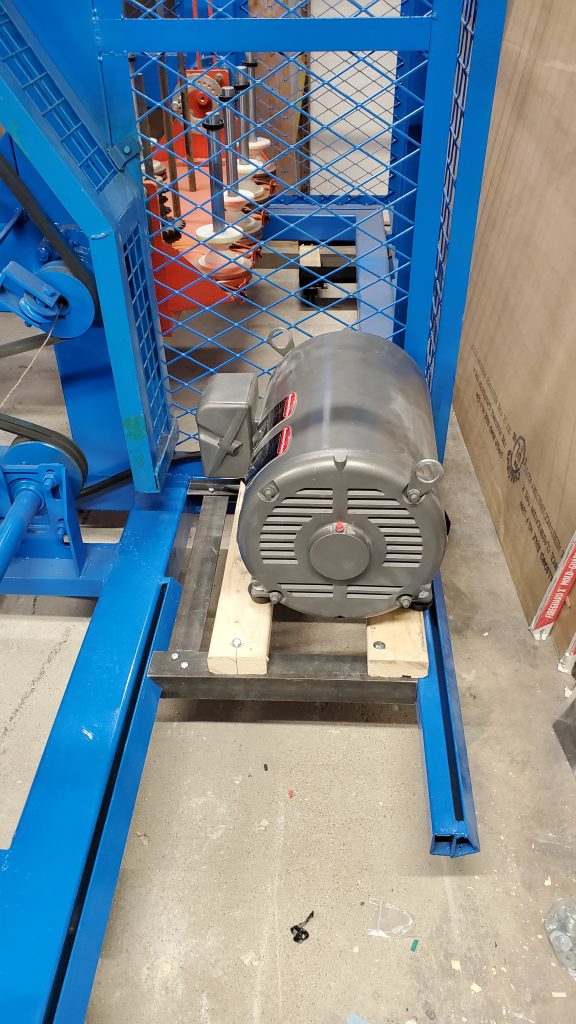
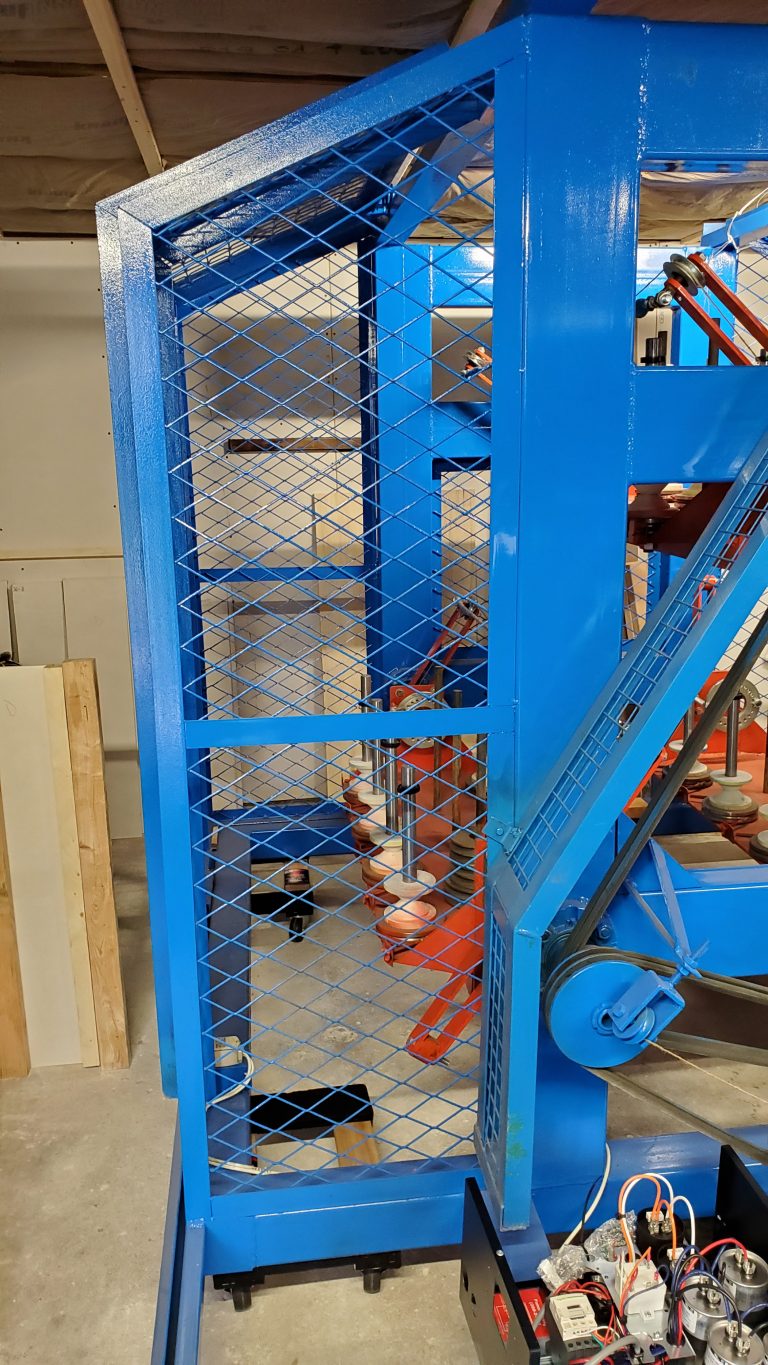
But the motor is about 250 pounds so mounting it requires some degree of reinforcing. So I crafted a shelf to hold the motor.
The motor is finally on the machine and wired. The cables need to be managed and secured but everything is wired. The generator can be connected and the wire connections can be tested with a meter to be sure everything is wired properly for the machine.
Need to transfer some twine to paper tubes so I can runic through the machine. I can test the electrical connections but until I have something to run through machine I can’t actually press the start button.
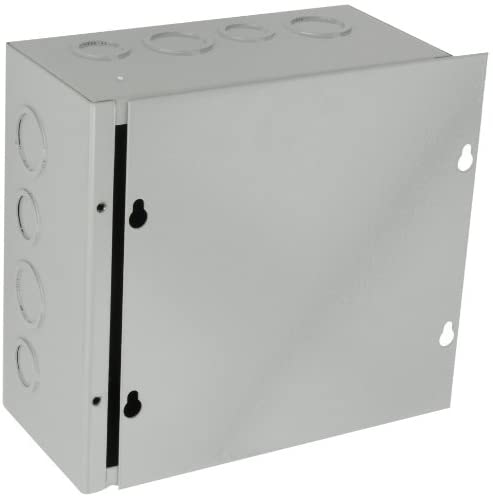
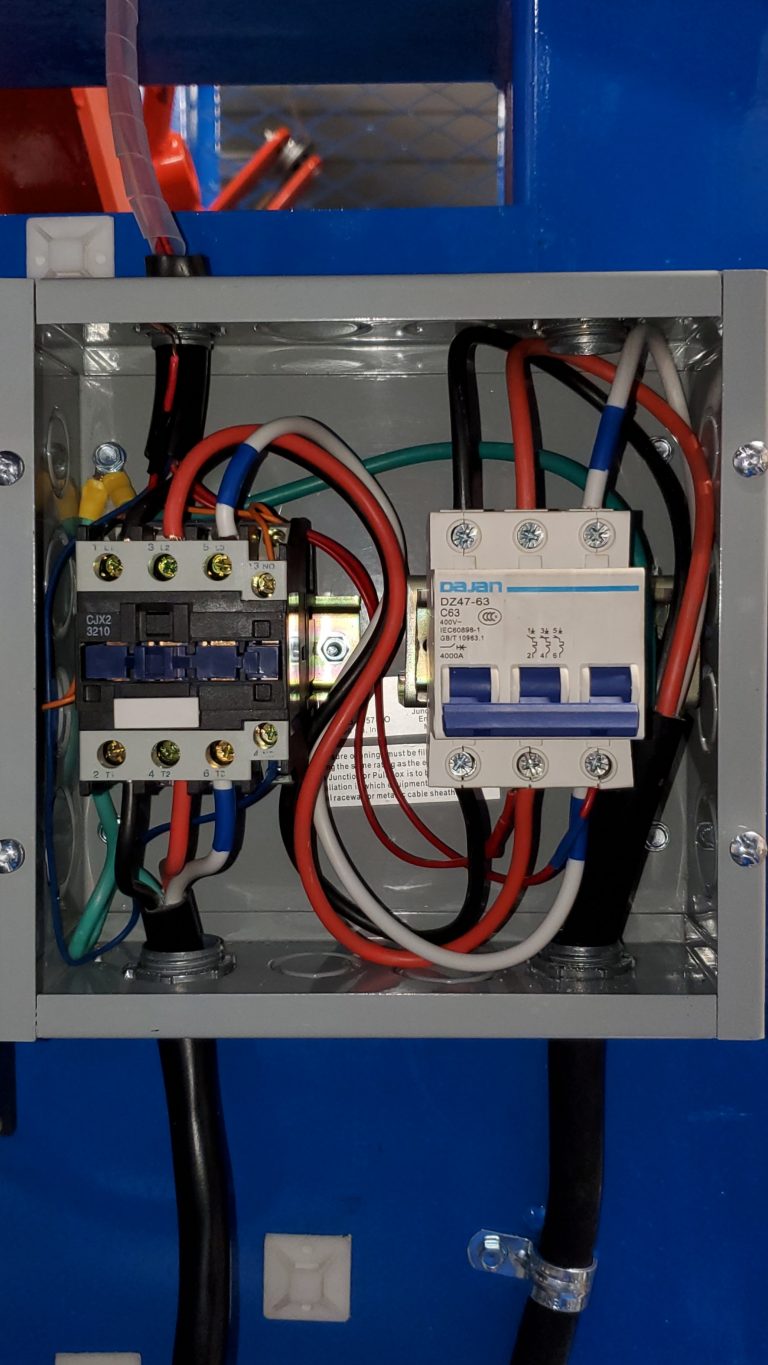
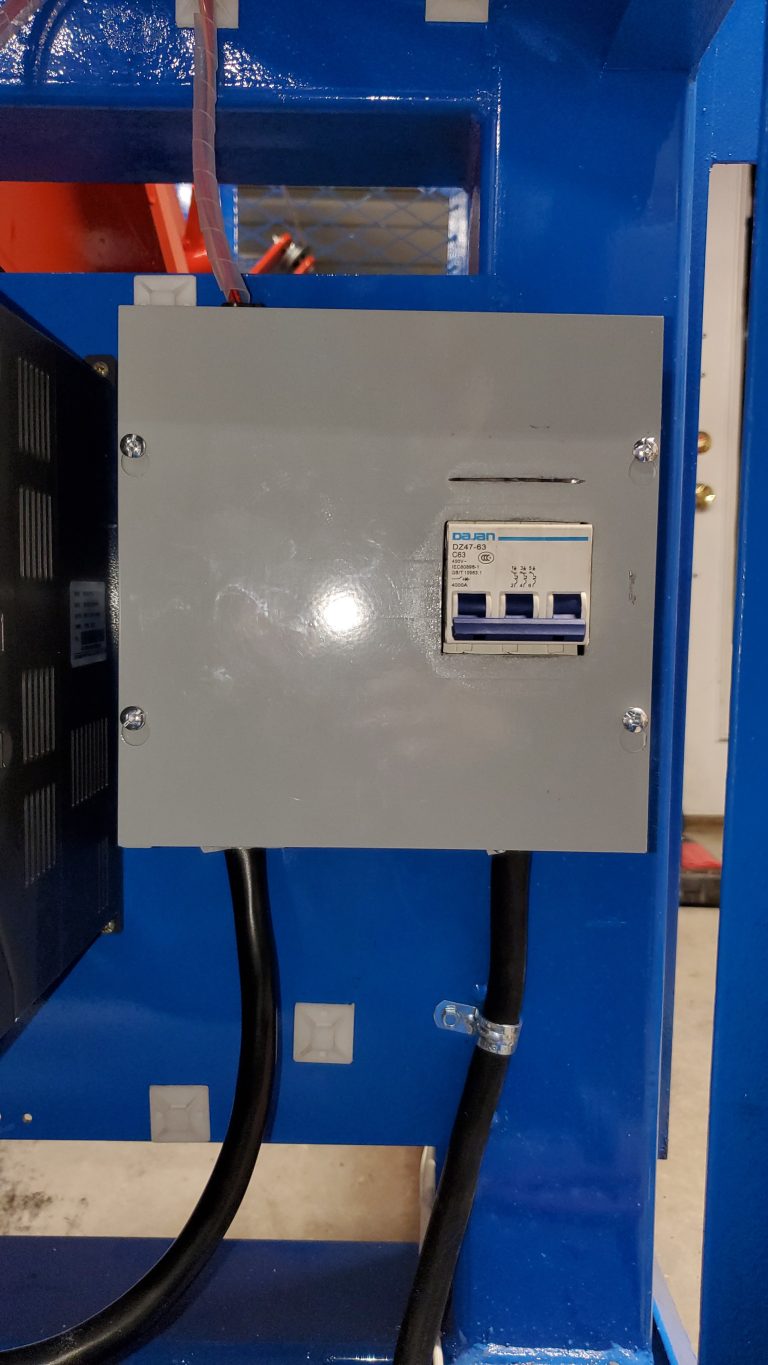
So the main electrical power connection for the rope machine were mounted to a piece of sheet metal under the control panel. There wasn’t any effort made to prevent electrical shock or short circuit such as a proper electrical enclosure. So I purchased an 8″ x 8″ x 4″ electrical junction box to put the 220v breaker and relay inside of.
I modified the box and added a stand-off so the breaker switch could be flipped without taking the cover off. Since I had to disconnect the wires so I could route them into to box I decided to use properly color coded wire and run the ground wires to the .other controller. The factory just used red wire for everything and didn’t provide for a ground wire…
Here are some before and after photos.
I’ll probably paint a rectangle on the cover around the breaker with labels for on and off. This box looks a lot cleaner and I can reach down to flip the breaker on and off without worrying that I’ll be electrocuted if I accidentally touch one or more of the power connections.
it seems that transporting the container from the rail yard to the workshop isn’t an easy or straightforward task. To begin with you really only have one option for having the container picked up at the rail yard. Next, that company will only take the container to a commercial address. Third, you gotta have a way to unload the machine and transport the contents to the workshop. Fourth, every day you don’t get this accomplished costs hundreds of dollars.
Rope machine out of the container and on the truck headed to the workshop.
Me and my machine!
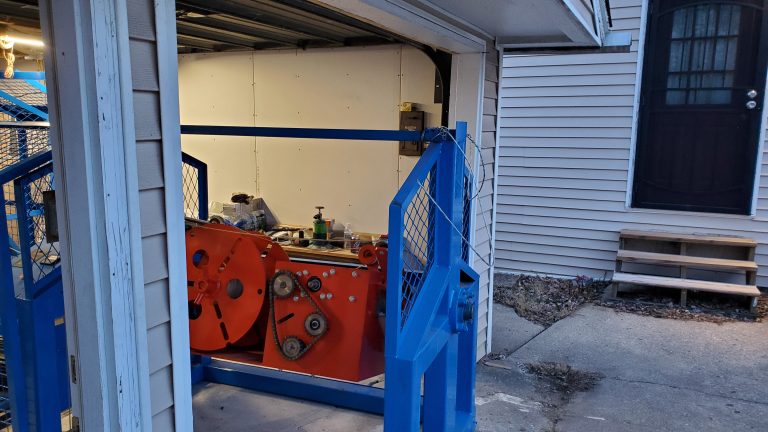
Tow truck driver managed to get the machine most of the way into the workshop.
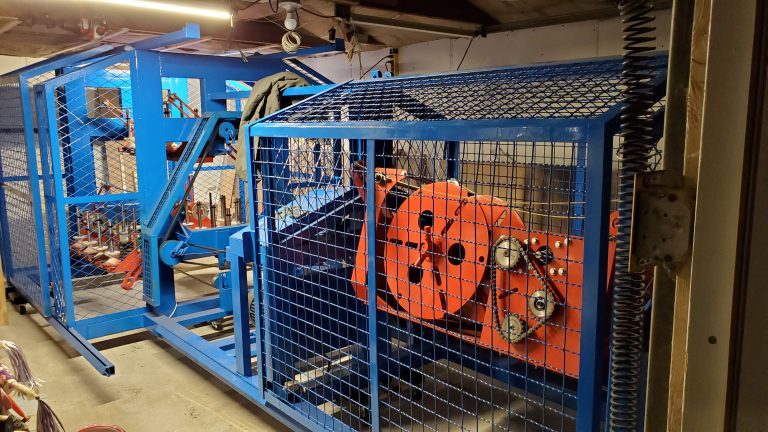
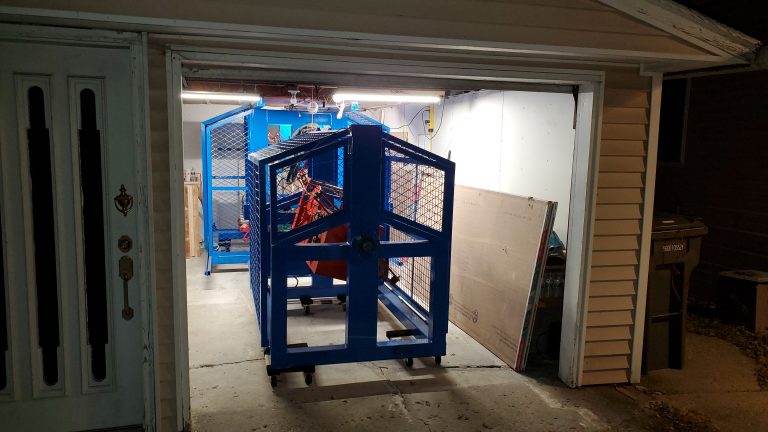
The rope machine takes up most of the space in the workshop.
The machine in its new home.
Setup
So just to get the machine fully into the workshop I had to lift it and set it on 6 furniture dollies then still had to us a 5′ pry bar to slowly nudge it into place.
Next step is to connect the power. This sounds easy enough but it’s pretty complicated. The workshop doesn’t have the right power requirements so I need to use a large generator and a converter to change to power into the kind the rope machine can use. I decided to mount the converter to the machine. The converter comes as two parts; the control panel and the idler motor. The panel will be mounted on the large cage near the machine controls and the idler motor will be mounted on the other side near the floor.
Phase converter control panel mounting area.
Today I was able to add mounting brackets, attach the control panel to the cage, run the 50 amp and 30 amp power cords to the control panel and to the machine as well as run the line for the idler motor, and wire the control panel.
Phase converter mounted using new brackets
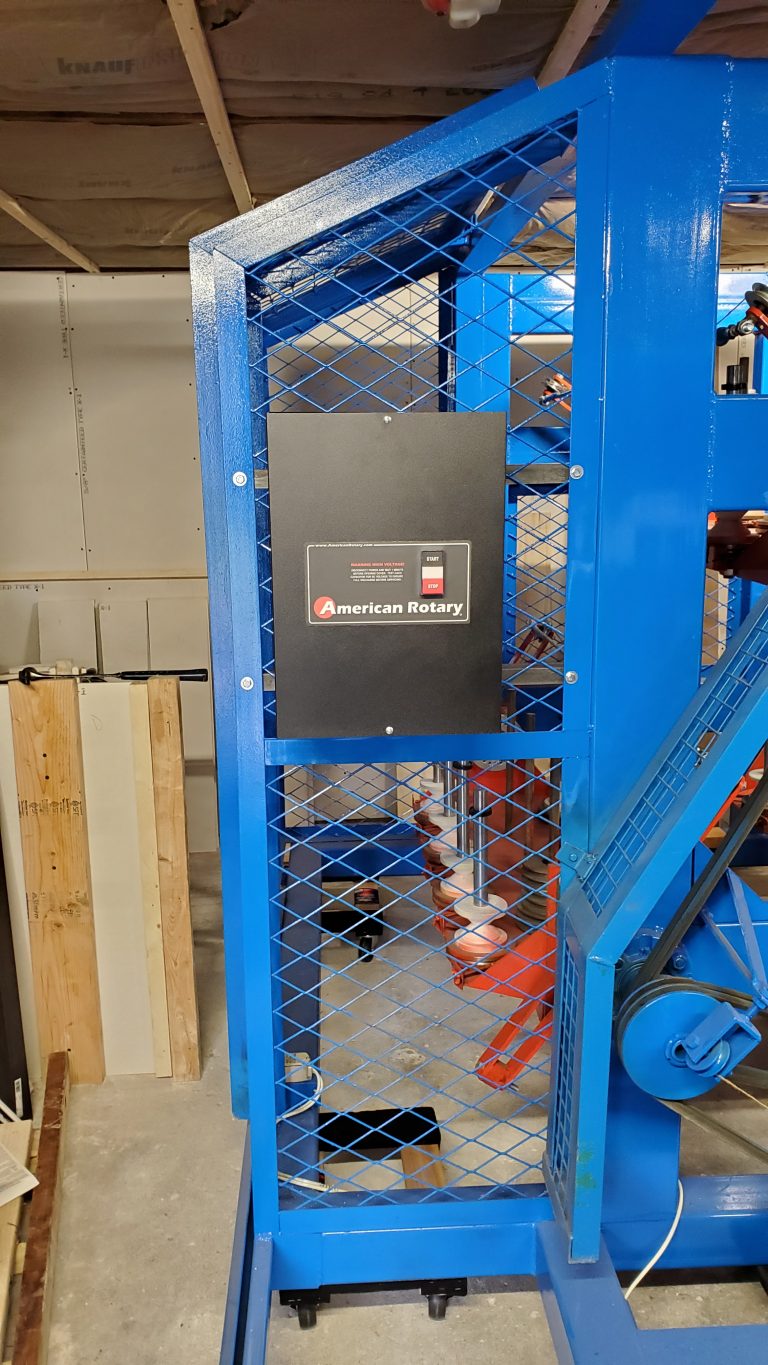
Mounted phase converter control panel with cover on.
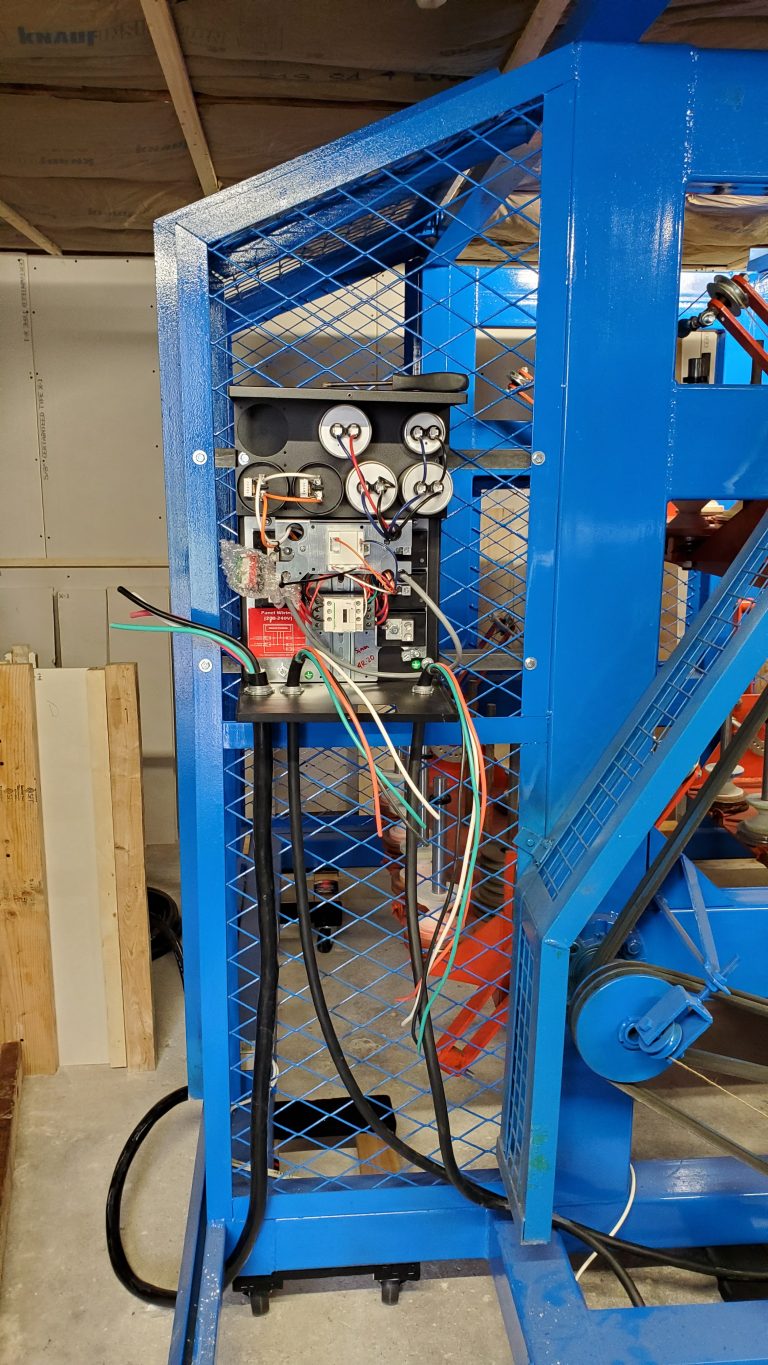
Phase converter control panel with power cables ready to wire.
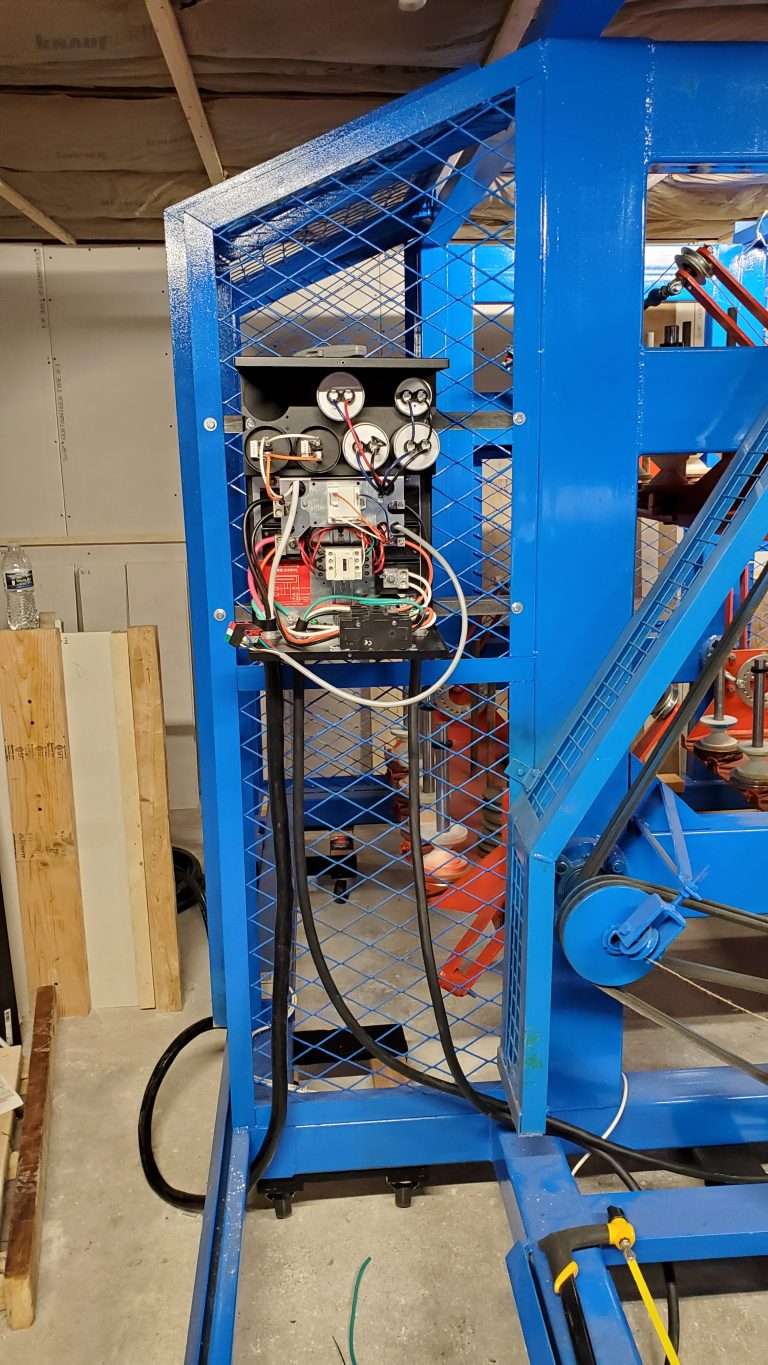
Phase converter control panel fully wired.
Closeup of phase converter control panel showing wiring and installed circuit breaker.
Wired phase converter control panel with cover on and power cords running to the generator, idler motor position, and rope machine power input.
Next, I need to mark the power connections with appropriately colored electrical tape, bundle wires together with zip ties, terminate the unused neutral wire from the generator, attach cable clamps to secure the cords to the frame of the machine, move the open power connections on the rope machine into an electrical junction box, mount the idler motor to the machine frame, and wire the idler motor.
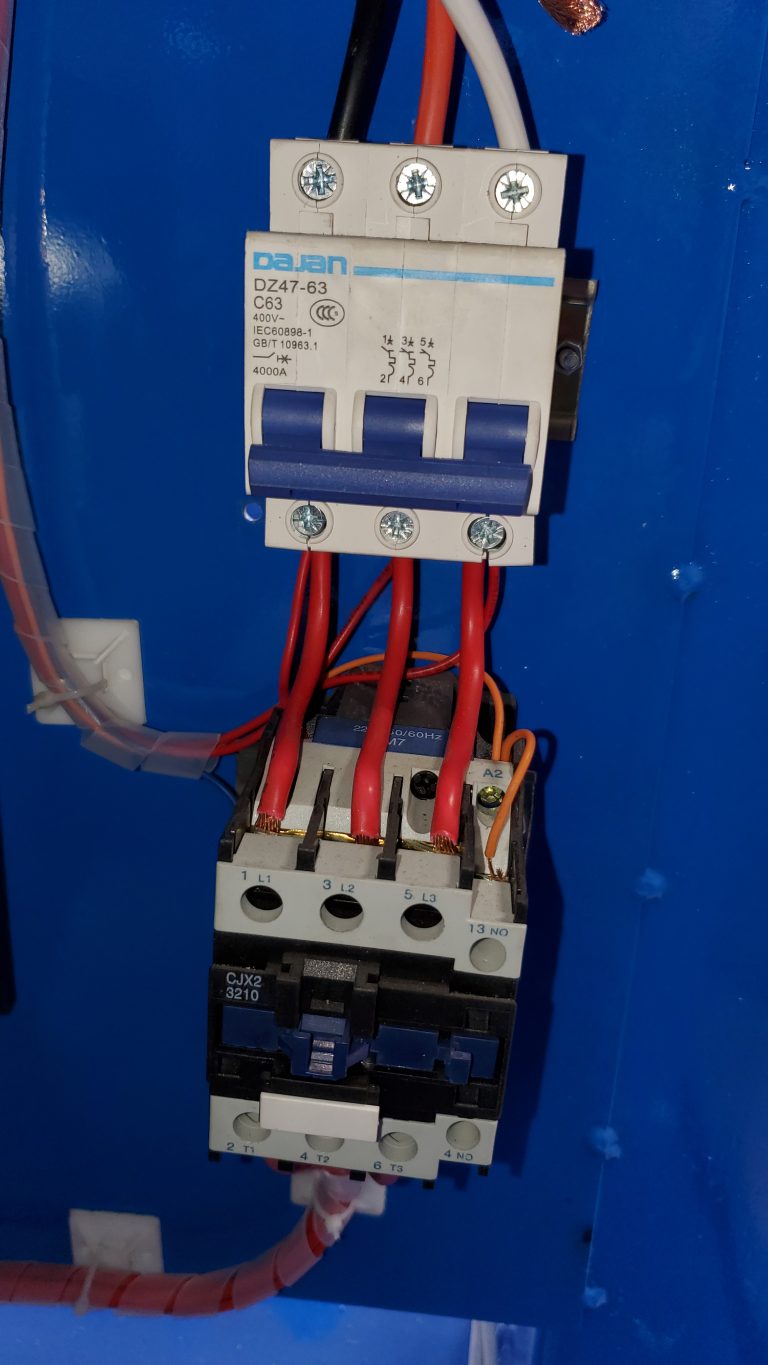
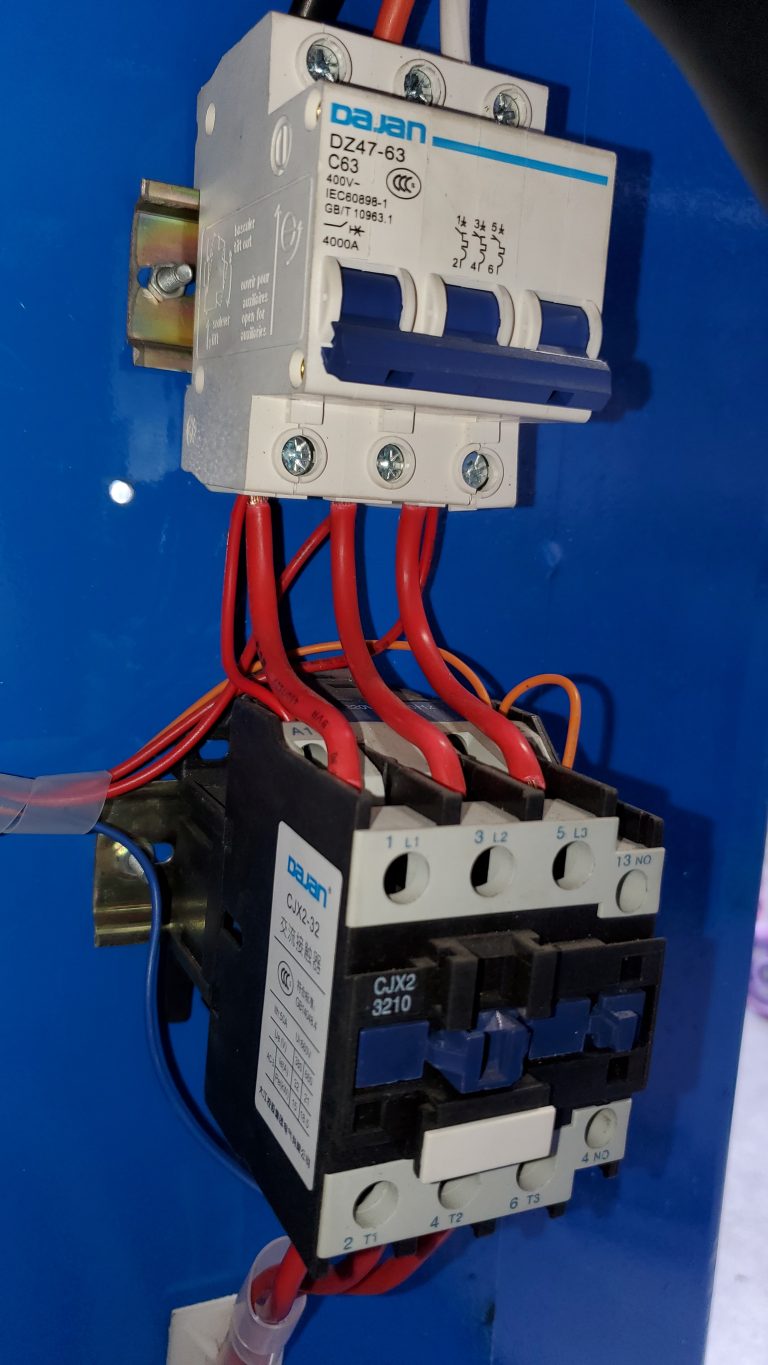
3 phase, 240V circuit breaker and relay for the rope machine without any enclosure.
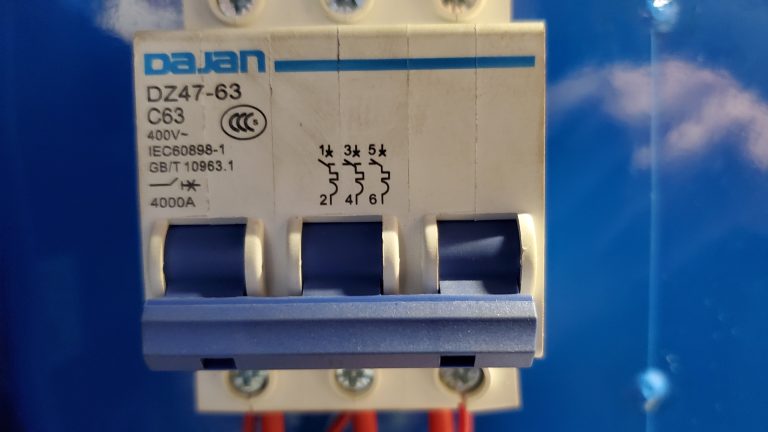
3 phase 240V circuit breaker
3 phase power relay that connects to start, stop, and safety switches.
Bought some jute twine to run through the machine to learn how it works…
So the thing about shipping containers is that it for every thing they makes easier to ship goods there’s also a drawback. Common benefits are the ability to load the container in one country and have ships, trains, and trucks be able to move it without the need for the contents to be removed and loaded into the next conveyance before continuing on.
The apparent problem with using shipping containers is that it’s really difficult for the average guy to deal with them unless you have a warehouse with a dock available to you. When I researched the process of receiving a shipping container it was clear that it was much better and cheaper to arrange the trucking of the container from the yard to your facility on your own because pretty much any entity you deal with is going to charge a fee to higher a trucking company. More than once I saw it recommended that the container be shipped from container yard to container yard instead of warehouse to warehouse.
So that’s what I chose to do. But it seems that you have to find the right trucking company because the company has to be UIIA compliant. What’s that? Unofficially it’s a way to make sure only certain companies can move a container.
I didn’t realize that the customs process wasn’t included in the very expensive shipping charges so that’s my fault. If it had been done then Monday I could have started trying to get the container moved to the workshop. Instead I was already paying storage fees to the container yard before I could even try to move the container. I called a company that can move the container but they would do it because the delivery address is residential. How do you expect me to get the container in that case? The recommended a few companies that could deliver to a residential address. So I called and scheduled a truck to pick up the container at 9am the following day. This way if there was any problems I had the rest of the day to fix it. Well the company lost my appointment the managed to put me off all day until it was too late to get the container out of the yard, unloaded at the workshop, and returned to the yard before it was closed. I knew there was a possibility that the yard wouldn’t let the driver in without the UIIA stuff but I figured it was worth the gamble and left the rest of the day to find a workaround. BTW, the towing companies are the cheapest method for this process…
So I’m going to use the address of a commercial property I looked at leasing that’s actually only a couple miles from the workshop and have the trucking company and the flatbed driver meet me there. Then the flatbed can transport the machine to the workshop for me. Would have been nice if I could have initiated that plan 5 days ago.
Can’t do anything until Monday so think I’ll relax tomorrow.
Not much else to say about that. Really need to get the generator enclosure completed this weekend so the materials won’t be in the way. Really hope I can transport the machine next Tuesday since I scheduled a day off that day just for that reason.
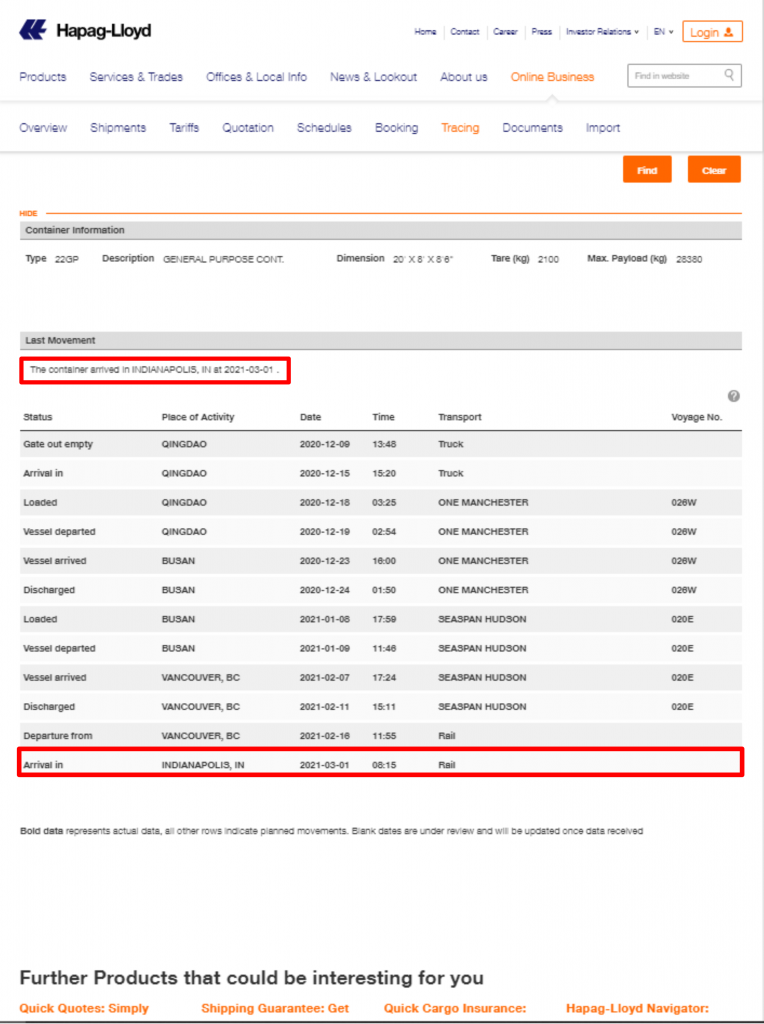
As soon as I got a container number I’ve tried multiple ways to track it or the ship it was aboard . Through Hapag-Lloyd I have tracked the container. It told me when it left the yard empty before the machine was loaded into it andwhenits been loaded on or taken off a ship. It said the ship it was on arrived in Vancouver a few days ago and a couple of days ago said it had been taken off that ship. So just waiting for it to e loaded onto a train and sent here. But I also track the container using ShipsGo which sends me an email whenever there is a status change. ShipsGo sent anupdat that the container arrived in Vancouver about a week early than Hapag-Lloyd said and indicated the container would arrive in Indianapolis on February 14th. Then today it said it was being loaded on a train on February 14th and would arrive Indianapolis on February 15th. The best information I could find said Vancouver to Indianapolis by rail was 58 hours so 24 hours seems pretty unlikely. I’m pretty sure its still in Vancouver waiting to be loaded on a train
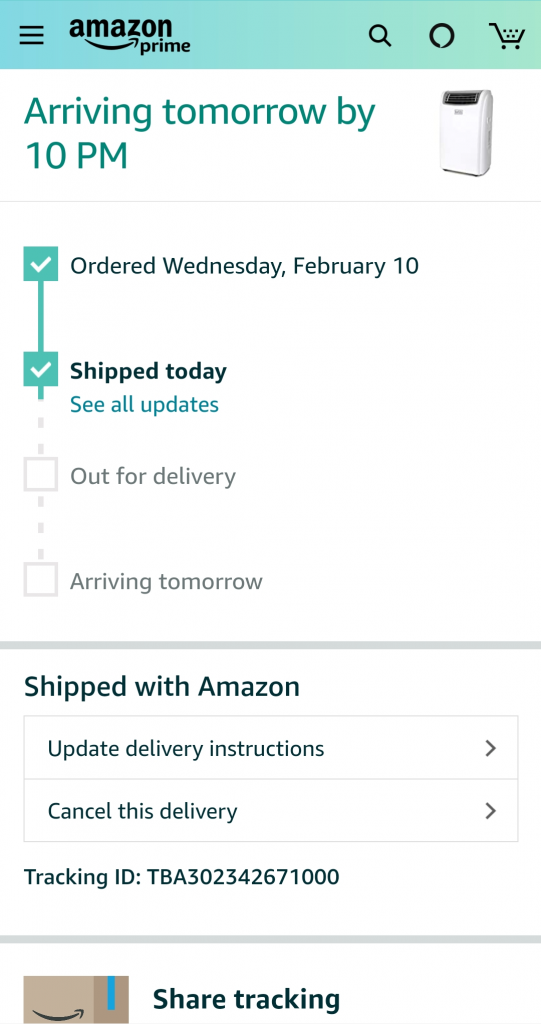
So I received the new air conditioner/ heater unit. It’s a heat pump not a heater. So an air conditioner takes air and transfers the heat outside and the cool inside. This unit basically reverses the process while in heat mode. It blows the cold air outside and the warm air is returned to the inside. Since the workshop isn’t heated while unoccupied it is very difficult for this unit to bring the temperature up to a comfortable level. The temperature recently has been between 15°F and 25°F. The workshop is mostly insulated but there are some significant issues with that. There is a fairly significant gap under most of the garage door. It also doesn’t have any weather stripping. Its an uninsulated sheet metal door. It transfers heat outside very effectively. That makes it very difficult to heat the space efficiently. I need to figure out how to get that door unsullied. But with the new unit and the space heater working together it is possible to raise the temperature despite the very low temperatures. Pretty sure if the outside temperature was above 32°F (freezing) the new unit could handle the task by itself. I think now if left only itself it would struggle to maintain a constant temperature.
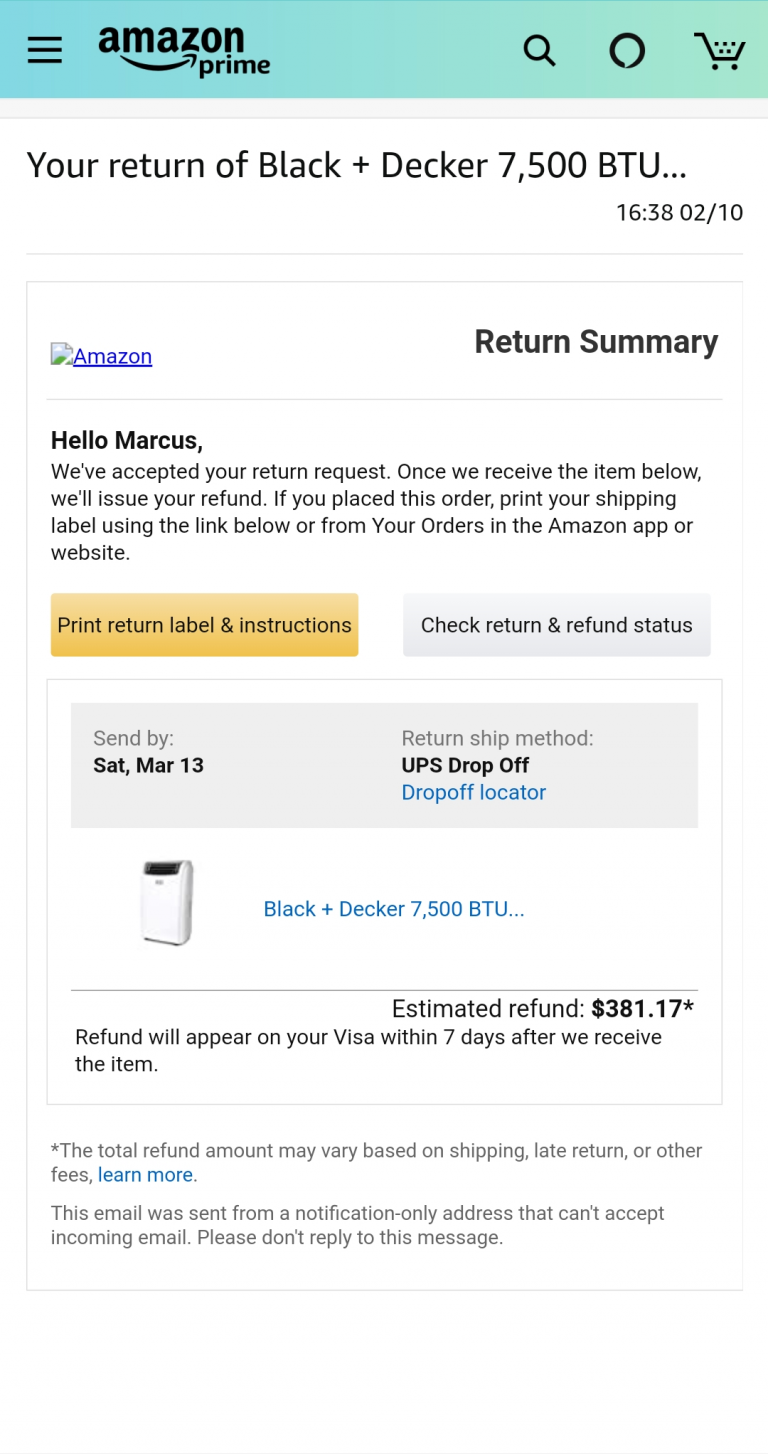
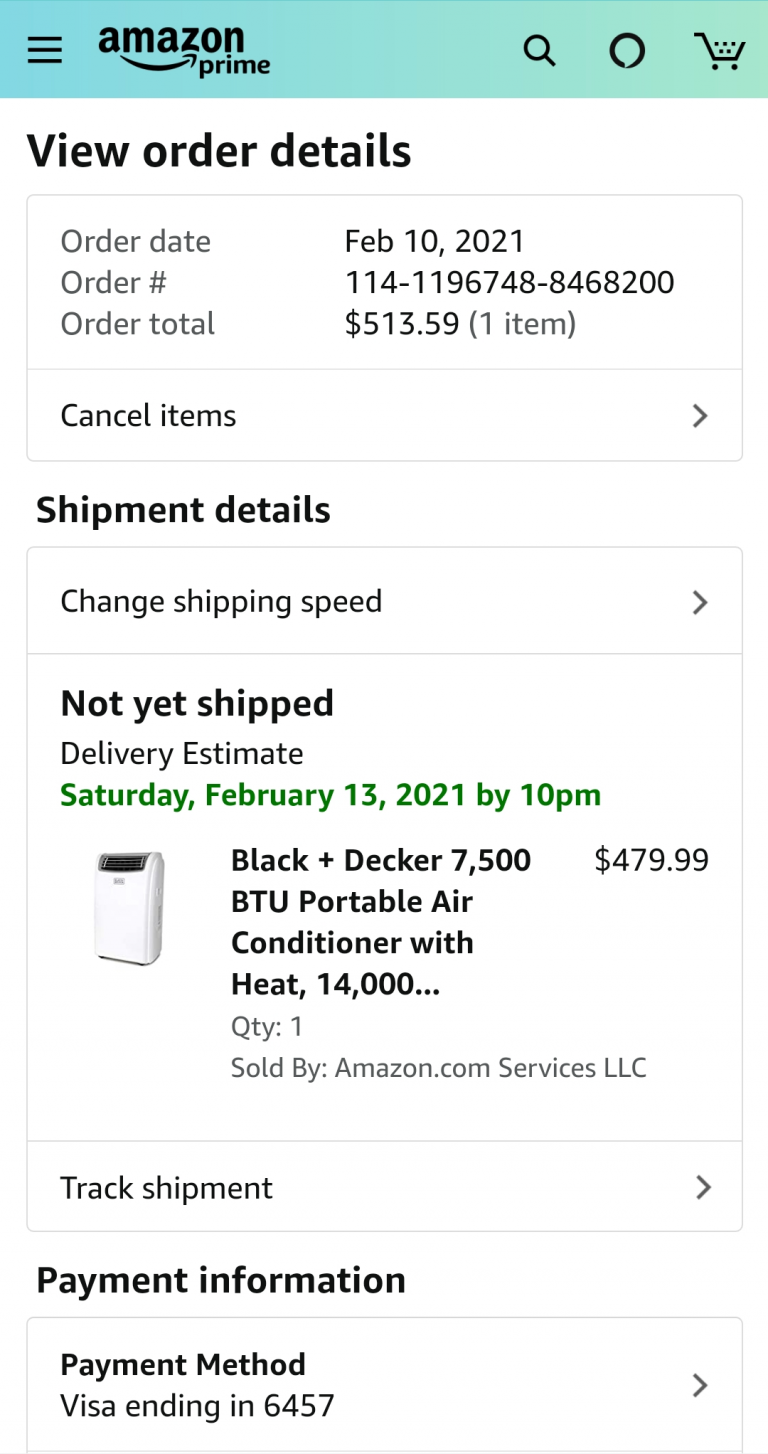
So I ordered a replacement and started the return process on the other one. The new and I mean new onewon’t arrive until Saturday! Guess I could change the address to the workshop address and hope it arrives while I’m there. Anyhow it looks like it’ll be another really cold day in the workshop this Saturday.
Also, I have to repack the wrong unit and drop it off at UPS. Thats more than a little out of the way.
I suppose I should have bought the system a lot sooner but with the insulation and mild winter temperatures the little heater has been mostly adequate. Think I’ll need to borrow a larger heater this weekend.